
What is integration and planning in industrial automation projects?
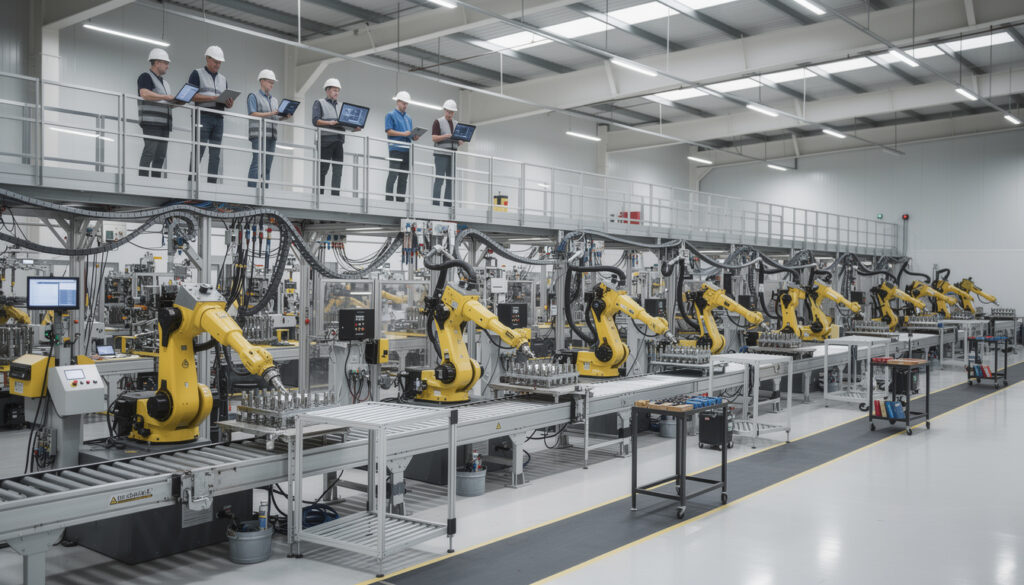
Integration and planning represents the systematic process of combining disparate automation systems, equipment, and software into a cohesive and functional production environment. This encompasses all stages from initial concept and requirements definition through design, implementation, testing, commissioning, and continuous optimization. The process involves multiple engineering disciplines working in coordination: mechanical engineers design physical systems, electrical engineers specify power and control infrastructure, controls engineers develop logic and interfaces, software engineers create user interfaces and data systems, and safety engineers ensure compliance with regulatory standards.
The ultimate goal involves creating a unified, efficient, and reliable automated system that meets specific production objectives while maintaining operational flexibility for future needs. Successful automation systems integration requires understanding not only individual component capabilities but also how these components interact within the broader manufacturing ecosystem.
What are the core components of effective planning?
Effective planning involves comprehensive data collection about existing processes, clear objective setting based on business requirements, thorough risk assessment covering technical and operational challenges, and detailed resource allocation including timeline and budget considerations. Upfront analysis prevents costly rework and delays later in the project lifecycle, making initial planning investments particularly valuable for long-term project success.
What information is needed before designing an automated production line?
A line design needs product specifications, takt time and cycle targets, quality requirements, available floor space, utilities, and constraints such as changeover frequency and staffing model. Inputs usually include part drawings with tolerances, product variants, incoming material condition, reject handling rules, and packaging or pallet patterns. Missing data often becomes scope creep during the build phase, making thorough upfront data collection essential for project success.
The data collection process must account for both current production requirements and anticipated future changes, ensuring the automated production line design provides sufficient flexibility for evolving business needs.
Required production targets and variability
Understanding production volume, takt time, peak demand patterns, seasonality effects, batch size requirements, and product mix variations directly influences line capacity, flexibility requirements, and overall design architecture. These factors determine equipment selection, buffer sizing, changeover mechanisms, and quality control integration points throughout the production system.
Quality and traceability expectations
Defining inspection points, serialization requirements, audit trails, rework loops, and deviation handling procedures ensures the system meets industry standards and customer quality expectations. These requirements influence sensor placement, data collection systems, and integration with enterprise quality management systems.
Facility constraints and infrastructure
Site-specific limitations including available space, ceiling height, power supply capacity, compressed air availability, network infrastructure, forklift traffic patterns, noise regulations, and designated safety zones shape the physical design and layout of automated systems. These constraints often determine feasibility and influence cost estimates for custom automation solutions.
How do automation systems integration projects typically work from concept to handover?
Most projects follow structured phases: requirements definition, architecture and design, build and procurement, integration, testing including Factory Acceptance Testing and Site Acceptance Testing, commissioning, and operational handover. This phased approach allows for early validation of assumptions and stakeholder alignment on acceptance criteria, reducing project risks and ensuring deliverables meet specified performance targets.
Each phase includes specific deliverables and approval gates, creating checkpoints where project teams can validate progress against original objectives and make necessary adjustments before proceeding to subsequent phases.
What are the key stages in robot integration?
Factory robot integration involves specific phases including robot selection based on payload and reach requirements, cell design incorporating safety systems and tooling, safety system implementation with proper risk assessment, programming including teach pendant and offline programming, and calibration to ensure accuracy and repeatability. These stages connect with broader automation project timelines, requiring coordination with other system components and overall production line commissioning.
How is safety planned for robot cells during integration?
Safety planning combines comprehensive risk assessment, safeguarding design including guarding, scanners, and interlocks, and validated safety functions that match real hazards and operating modes. Common issues include mixing safety and non-safety logic, or using overly aggressive stops that increase component wear and system downtime. Adherence to international safety standards, particularly ISO 10218-1 for industrial robots, provides the framework for systematic safety implementation in factory robot integration projects.
Safety system design must consider both normal operation and maintenance access, ensuring protection during all phases of robot cell operation while maintaining production efficiency and system reliability.
Risk assessment inputs that influence design
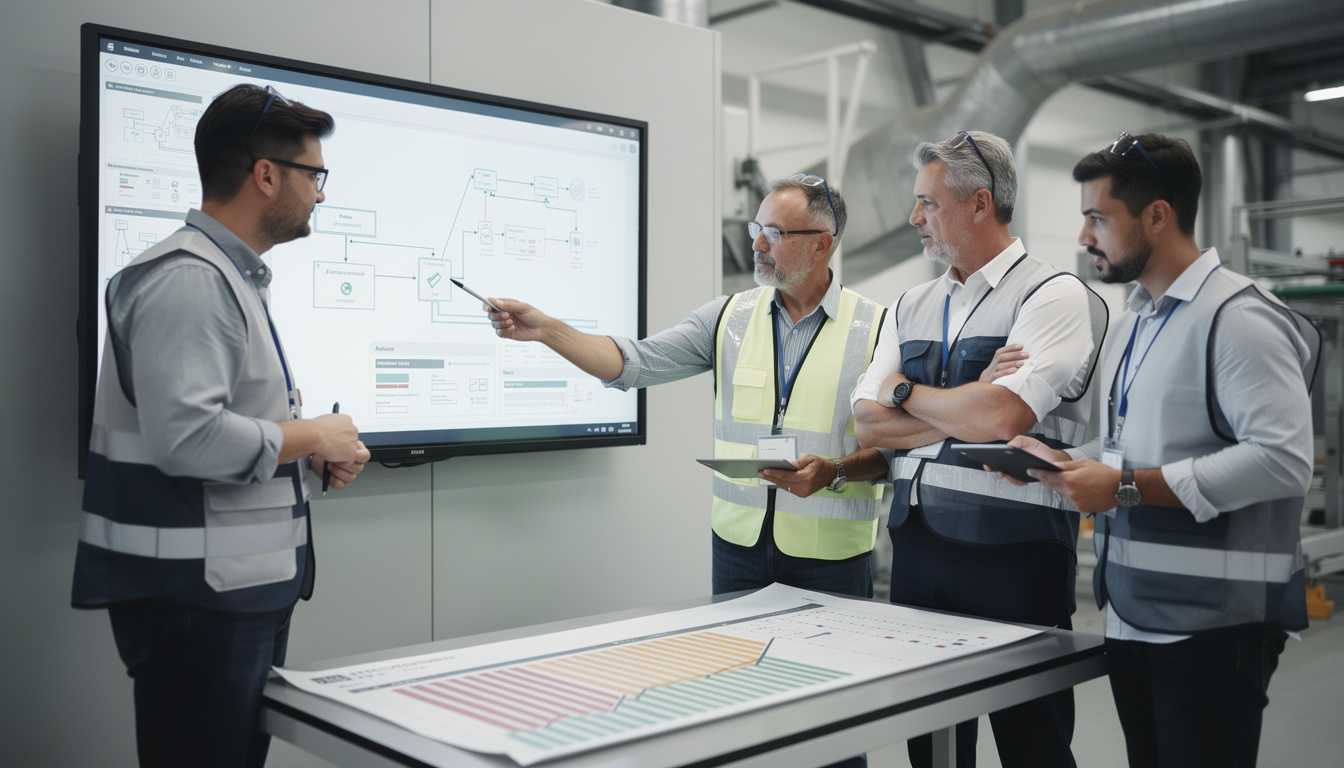
Factors considered during risk assessment include robot payload and speed capabilities, presence of sharp tools or hazardous materials, frequency of human access for maintenance or loading, task complexity, and environmental conditions. These inputs determine the type and level of safeguarding required, from simple light curtains to sophisticated area scanners and collaborative robot applications.
Safety functions that must be validated
Essential safety functions include Emergency Stops throughout the cell, protective stops triggered by safety devices, gate interlocks preventing access during operation, enabling devices for maintenance mode, and safe speed and position monitoring systems. Each function requires validation through documented testing procedures to ensure proper operation under all anticipated conditions.
What is commissioning, and why is it different from startup?
Commissioning represents a documented process of validation, functional testing, safety checks, and readiness verification, not simply powering on equipment and running parts. Commissioning often includes pre-commissioning checks, cold tests for logic validation without process materials, hot tests combining logic and process with actual products, and performance testing against established Key Performance Indicators. Success measurement after automation installation relies on KPI frameworks that validate whether the system meets original project objectives and performance specifications.
This rigorous approach ensures the system performs as designed and specified, providing confidence for operational handover and long-term reliability in manufacturing process optimization applications.
Types of commissioning tests
Pre-commissioning checks verify power, communications, and safety systems before introducing motion or process materials. Cold tests validate control logic, human machine interfaces, and data collection without running production. Hot tests combine logic and process with actual products, verifying quality, throughput, and exception handling. Performance testing measures system capabilities against specified KPIs over extended operating periods.
| Commissioning Phase | Key Activities | Success Criteria |
|---|---|---|
| Pre-commissioning | Power verification, safety system checks, communication testing | All systems powered and communicating safely |
| Cold Testing | Logic validation, HMI testing, data collection verification | Control logic operates as programmed |
| Hot Testing | Production with actual materials, quality verification | Parts produced meeting quality specifications |
| Performance Testing | Extended operation, throughput measurement, optimization | System meets or exceeds KPI targets |
How should data collection be planned for manufacturing process optimization?
Data planning starts with deciding which decisions the data must support, then defining signals, timestamps, stop reason codes, and governance procedures so the data remains trustworthy and actionable. Many teams fail by selecting software before fixing data quality issues; starting with one bottleneck machine often produces faster learning and more immediate optimization benefits. Understanding the intricate details of process control systems becomes essential for effective data collection strategies that support meaningful analysis and decision-making.
Data integrity and consistency form the foundation for accurate analysis, requiring careful consideration of sensor placement, data validation rules, and automated quality checks throughout the collection process.
Minimum viable dataset for optimization
Essential data points include cycle count for throughput analysis, downtime events with timestamps, stop reason codes for root cause analysis, scrap counts with quality data, and changeover markers for efficiency measurement. This minimum dataset provides sufficient information for initial optimization efforts while establishing the infrastructure for more sophisticated analytics as the system matures.
Operator inputs vs. automatic sensing
Balancing automated data capture with necessary operator inputs requires strategies that make manual data entry efficient and accurate while minimizing disruption to production flow. For companies seeking to integrate comprehensive data solutions into their manufacturing processes, leveraging expert turnkey robotic solutions take a look at the site https://assatec.co.il/ can streamline the entire project from planning through implementation.
What causes scope creep in custom automation solutions, and how is it controlled?
Scope creep usually comes from unclear requirements, late product changes, underestimated exception handling needs, or nice-to-have features added during the build phase. The complexities and challenges of integrating robotic systems effectively require careful planning and clear specifications, as outlined in NIST robotic systems interoperability research, which emphasizes the importance of standardized interfaces and systematic integration approaches.
Proactive scope management requires clear documentation of requirements, formal change control processes, and regular stakeholder communication to maintain project timelines and budgets while accommodating necessary modifications.
Change control that does not stall progress
Effective change control processes include rapid pricing mechanisms for proposed changes, clear scheduling impact assessments, and streamlined approval workflows that prevent unnecessary project delays. Changes should be evaluated for technical feasibility, cost impact, and schedule implications before approval.
Designing for exceptions early
Designing comprehensive error handling and recovery mechanisms from the project outset prevents the need for improvised solutions later in the implementation phase. Exception handling includes jam recovery, quality failures, material shortages, and equipment maintenance scenarios that commonly occur in production environments.
Success in industrial automation, from robot integration to complete automated production line design, depends on meticulous integration and planning that addresses technical requirements, safety considerations, and operational objectives. Adherence to established best practices, detailed specifications, and continuous optimization approaches ensures long-term operational excellence and return on investment. The holistic approach to manufacturing process optimization, encompassing automation systems integration, factory robot integration, and custom automation solutions, provides the foundation for competitive manufacturing operations in modern industrial environments.
Assatec Robotics was founded in 1997 and specializes in developing custom robotic cells and automation systems. The company serves as a leading Fanuc systems integrator.
What are the main phases of an automation integration project?
Automation integration projects typically follow these phases: requirements definition and data collection, system architecture and design, equipment build and procurement, integration and testing, commissioning with validation, and operational handover with training.
How long does robot cell commissioning typically take?
Robot cell commissioning duration varies based on complexity, but typically requires 2-4 weeks for simple cells and 6-12 weeks for complex multi-robot systems with extensive safety requirements and integration with existing production lines.
What data should be collected before starting an automation project?
Essential data includes current production volumes and targets, product specifications with tolerances, quality requirements, facility constraints, available utilities, staffing models, and changeover frequency requirements for the production line.
How can scope creep be prevented in custom automation projects?
Scope creep prevention requires detailed upfront requirements documentation, formal change control processes, clear exception handling design from project start, and regular stakeholder communication with documented approval processes for any modifications.